Los Angeles County Museum of Art board members and Los Angeles County public officials hosted a ribbon cutting ceremony for the opening of LACMA’s new David Geffen Galleries on Sunday, April 19, 2026. That morning, as I walked out of the museum’s parking structure and through the courtyard with Chinese dissident artist Ai Weiwei’s bronze Circle of Animals / Zodiac Heads, I began to reflect on the content of this essay. I decided to continue my general approach to art appreciating aesthetic qualities, interpreting its symbolism, and situating it in the current context of power.
As the ceremony began, I nodded in agreement to much of what LACMA CEO and Wallis Anneberg Director Michael Govan said dressed in his sleek dark suit. According to him, the $732 million building was funded 80% with private philanthropy and the taxpayers of Los Angeles County paid the rest. He added that the wealth of art donated to the museum has exceeded the costs of it and expressed hope his team has created something that mirrors our diverse Los Angeles community. I remembered that when I entered the museum looking for Chicano and Mexican art. He praised the transparency of the building, “Where visitors can see out to Los Angeles and people can see in.” I agreed with him appreciating the contrast of the art on the cement walls of the museum with the floor to ceiling windows that allowed me to see the city outside shining under the sun’s rays.
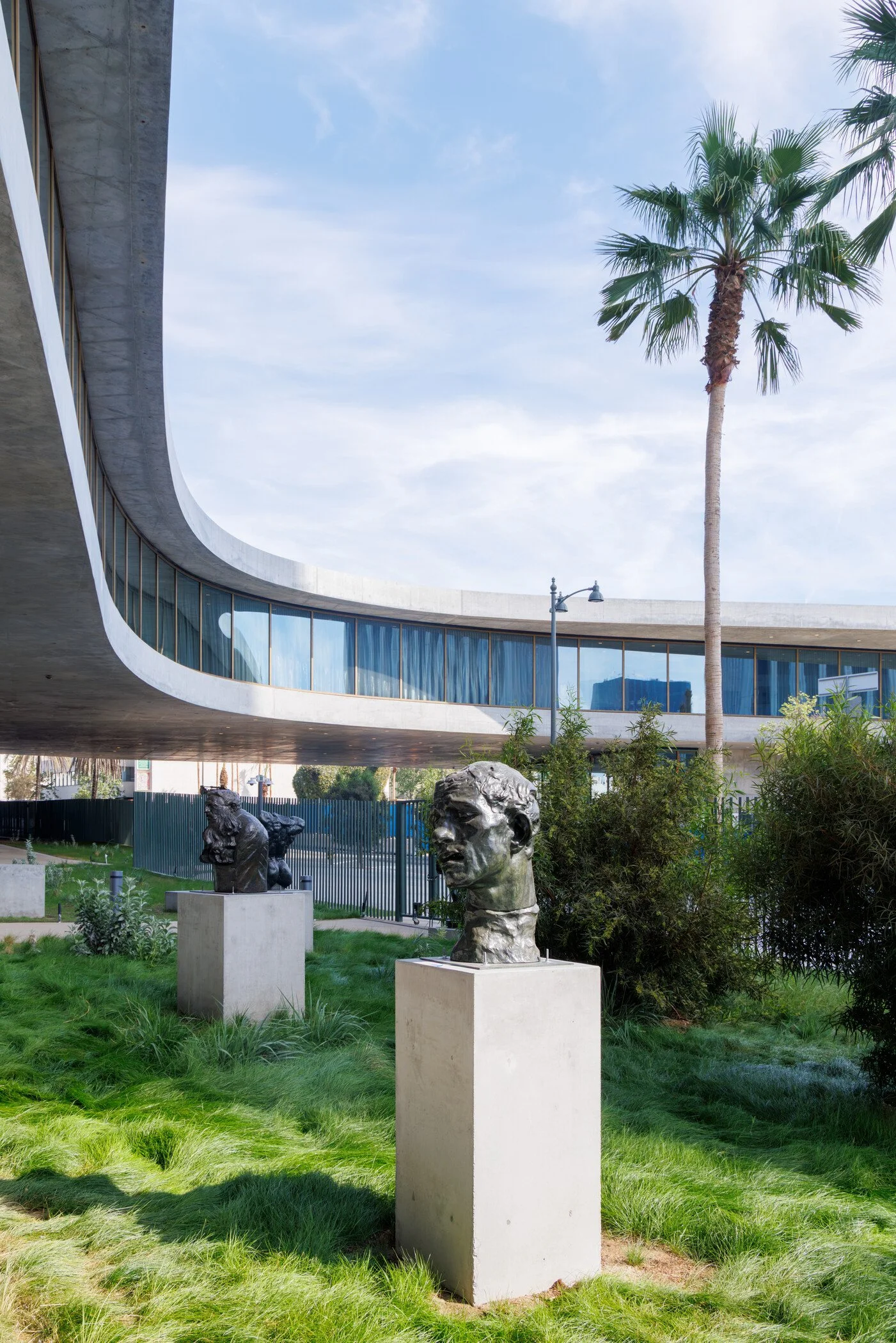
The famed LACMA building architect Peter Zumthor expressed his love for the building’s strong presence, connection to the ground, its sense of belonging, and the walls of stone. He said, “I looked at it and I succeeded.” He listed the materials he used: concrete, stone, glass, and steel and described the building as one large piece of concrete while praising its imperfections. He said, “If you’re lucky you will find some cracks in the floor already. Only God is perfect. Things should have traces of the human element.” I thought of the human traces of the working class, the construction, electrical, and concrete union workers, the restaurant and food truck workers who fed them between shifts, and the workers at parks and stores these workers take their families too. Would they visit the museum?
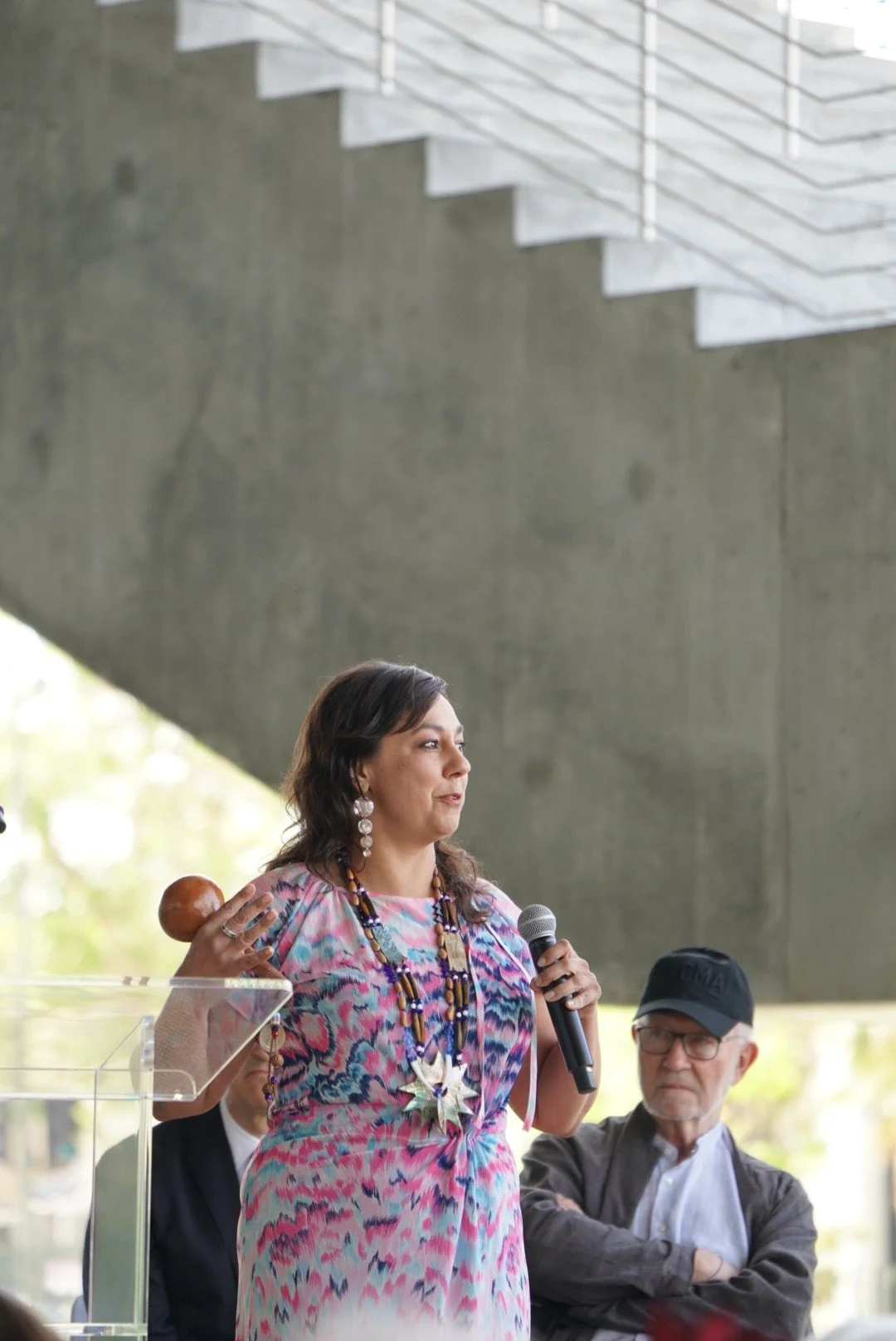
As the ceremony was concluding, Megan Dorame and Mercedes Dorame gave the new building a Tongva blessing and spoke beautifully expressing gratitude to the creator, earth, sun, water, trees, moon, and all the teachers and ancestors. The blessing and Michael Govan’s welcoming all those who’ve immigrated from the Americas made me feel welcomed at the ceremony and museum by those whose land it was and those who now manage it, though disparities in power resulting from conquest must be acknowledged.
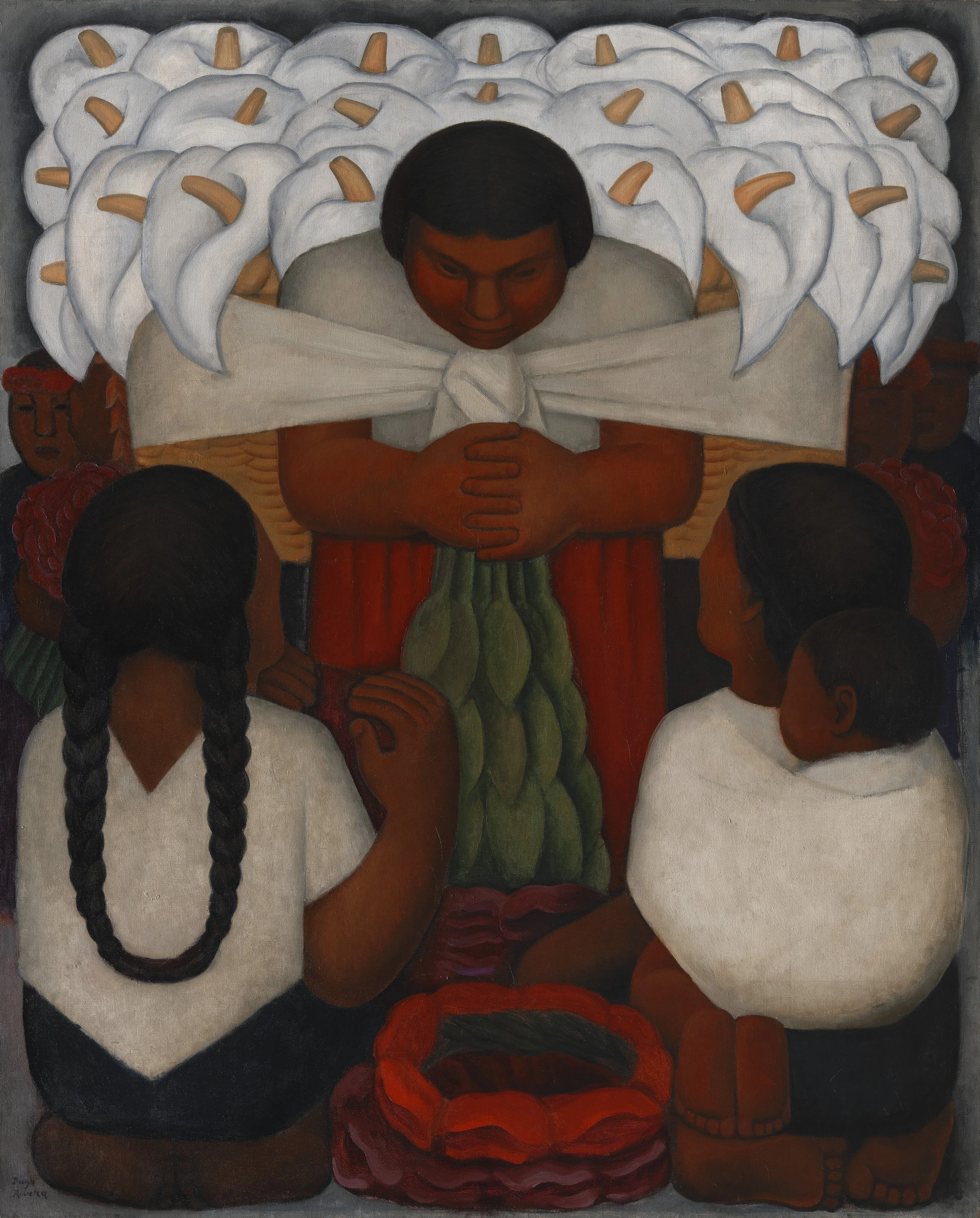
Flower Day by Diego Rivera
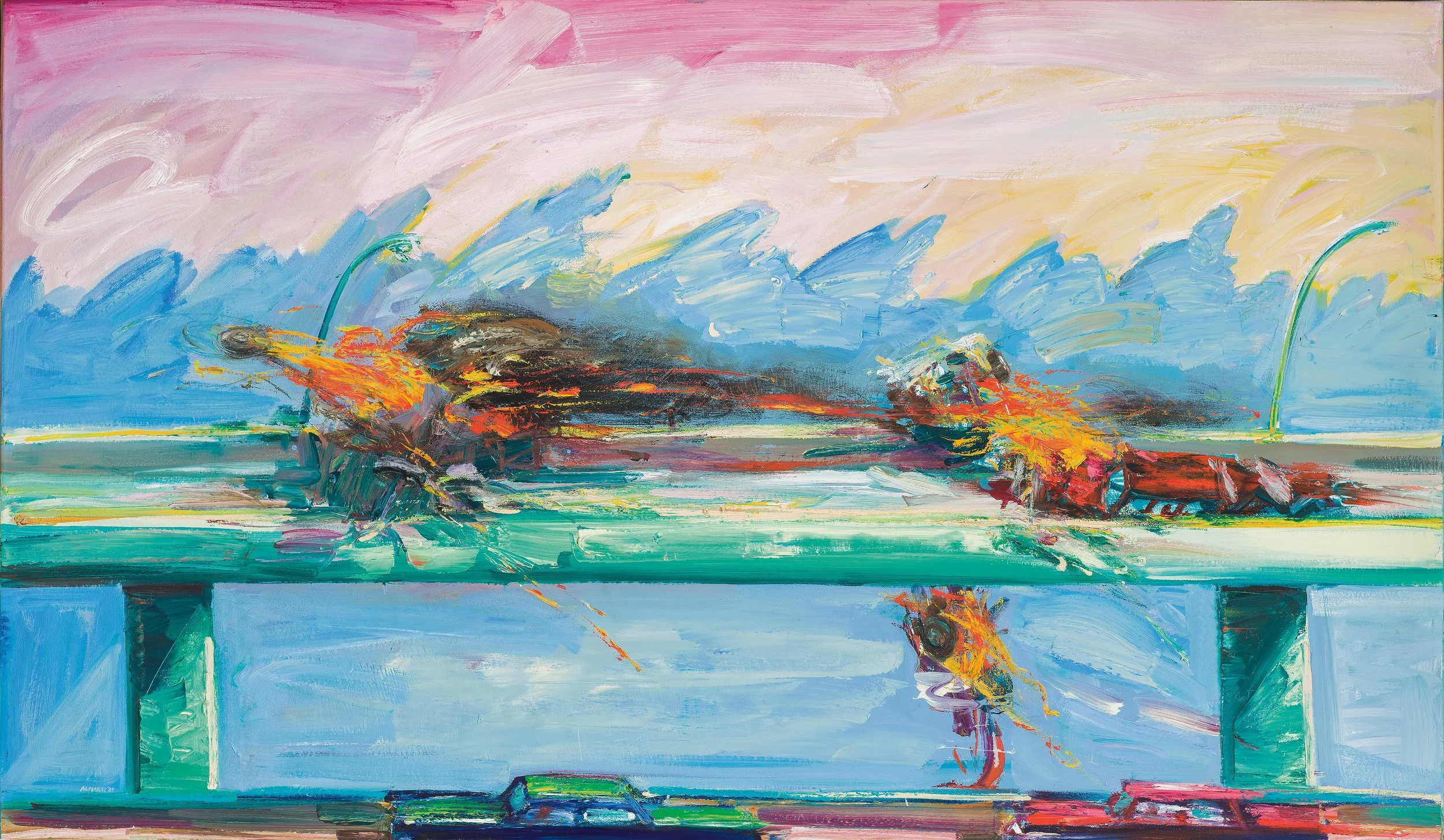
Diego Rivera’s Flower Day was one of the first paintings I saw immediately after I entered LACMA’s new David Geffen Galleries building. I thought of the Mexican painter’s socialist ideals, his challenges to power, including Nelson Rockefeller’s, and his praising of indigenous peoples by depicting them as art subjects and referencing their styles with his block-like figures, both apparent in Flower Day. The painting was hung alone centered on a cement wall very near a hall full of Mexican ceramics dated prior to the arrival of Spaniards. And beyond that hall was a gallery room of Chicano art and photography, including works by Yolanda M. Lopez, George Rodriguez, and rafa esparza. The work of Sandy Rodriguez hung on the outside wall of that gallery and in another section hung a painting of Carlos Almaraz.
Crash in Phtalo Green by Carlos Almaraz