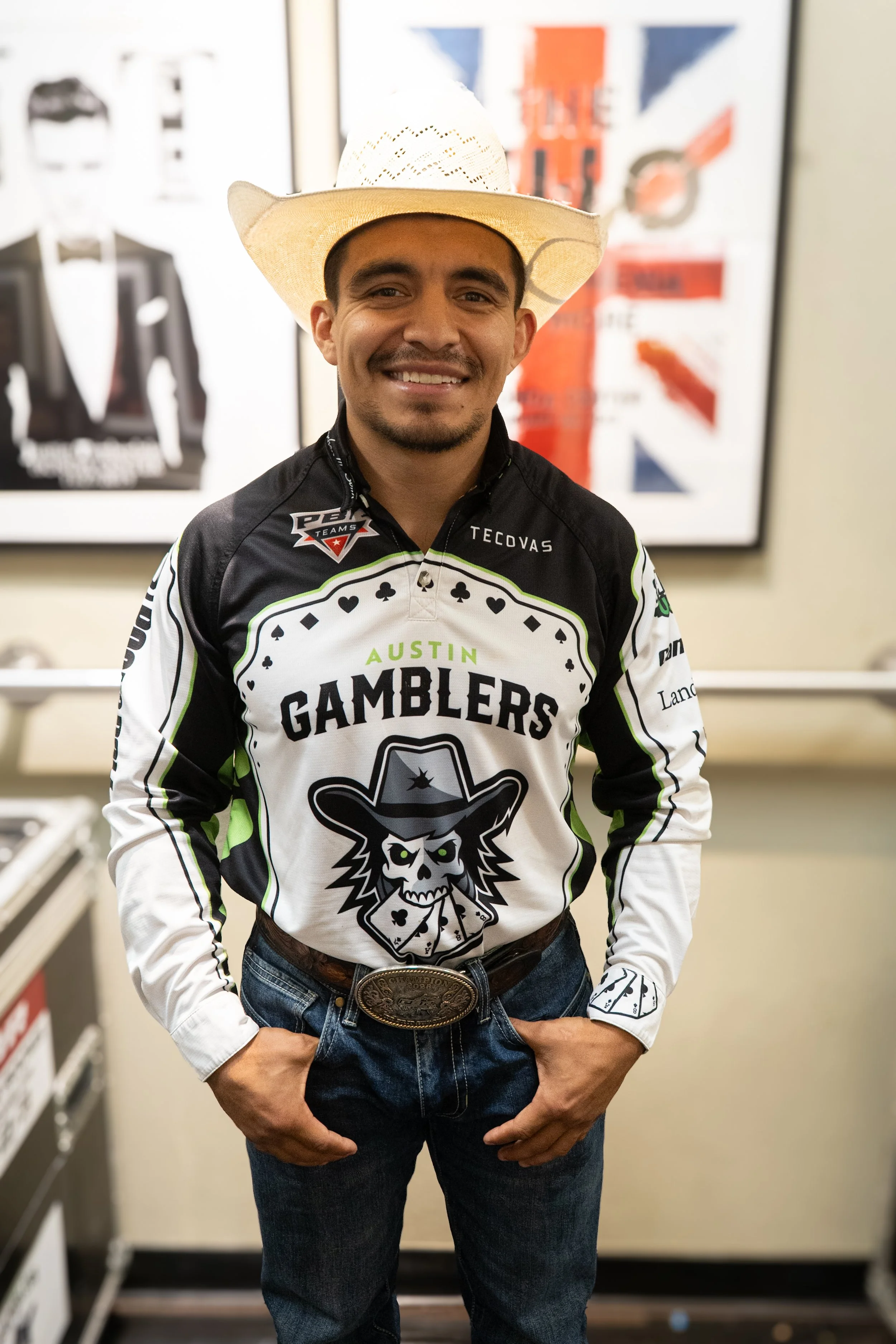
I completed this interview on Saturday September 12th, 2026, as part of Chicano Perspectives’ coverage of Professional Bull Riders: Team Series competition at the Honda Center in Anaheim, California.
Would you please introduce yourself? Yes, sir. My name's Andrew Alvidrez from Seminole, Texas.
Thank you. You're from Seminole, Texas, and where are your parents from? My mom is from El Paso, Texas, and my dad is from Odessa, Texas. They both grew up in Seminole, Texas.
The name of our publication is Chicano Perspectives. We highlight the efforts, the art, and the work of Mexican Americans. Not everyone that is Mexican American identifies as Chicano, and I think in Texas it's a little different. Do you identify as Chicano, Tejano, Mexican American, American or in any other way? Yes, if I meet people who are from Mexico, I know they're proud of where they come from, so I tell them I'm Tejano. And if it's an American, I tell them I'm Mexican.
There’s that contrast and at times people make us aware of it. Oh yeah, man. We've all heard that saying, "You gotta be more Mexican than the Mexicans and more American than the Americans."
Agree. And what significance does that have for you, being that part of the culture? Man, growing up it was—it was a little strange because the kids I grew up in school with who were from Mexico, they didn't see me as Mexican, so I really didn't get to hang out with them because I was too Americanized. And then the Americans could relate to some things, but I grew up in a Mexican household. My family and my parents came from immigrants, so they taught their children to be Mexican. That's what you do. There are certain things I could relate to with Americans, but really I just felt like I was all on my own lane.
And anytime I meet someone and they ask, "Where are you from?" I say, "Texas." They reply, "No, where are you really from?" "Texas!" Every time I introduced myself to anyone, like when I went to Brazil and they're like, "Oh, you're Mexican, Mexicano,” and I said, "Yes, I'm Mexican, but I'm also American. I'm from America." It's hard for them to understand that concept. I identify as Mexican, but my nationality is American, they must think about it.
Yes. I've covered the Gold Cup for our publication and as I interacted with international reporters I learned many are not aware of our Mexican American culture? They’re expecting a simple answer us being either Mexican or American. It's hard for them to understand that there's our culture that's part of both. Yes, sir.
Like you said, the Mexican part of our culture encourages the hard work ethic. Yes, sir. 100%.
What did your parents do for work? My dad worked in the oil fields. He’s done everything from drilling rigs, to pumper, to roustabout, and my mom was a nurse. Both of my parents were always working so it was normal for us to grow up seeing both of my parents working. That was life.
How did you become interested in bull riding? I was 3 years old and I watched the movie 8 Seconds. I fell in love with that movie and I kept watching it and watching it. And when I was 8 years old the Seminole County Rodeo was in my hometown. I kept begging my parents to let me ride. They finally let me ride and I got on my first steer, it threw me in the air, I landed on my back, and I was hooked ever since.
And how was your journey from watching 8 Seconds, starting to ride bulls, and then debuting for Profession Bull Riders? Oh man, even before I was in the PBR, I felt like a rich man. There was a time when I was working in the oil field, and I hated the oil field because I wasn't doing what I really loved. I was just paying bills. I remember praying to God, "God, I don't care if I'm a bum. As long as I can ride bulls, have enough money to travel, and go to these bull ridings, I'm a happy man." Sure enough, a couple weeks went by, and I started making a living. I really started making a living by riding bulls in 2019, before my PBR debut. I felt like a rich man then because I felt like 8 Seconds you know? Traveling, sleeping in cars, just roughing it out to get to the next bull riding.
But for me, it didn't seem like a struggle because I knew by the time I got to the bull riding, I had a bull I got to ride. Its’ great, man.
I miss those days more now. Now they have us at these nice hotels and you eat at nice restaurants and you talk to all these people, but the heart and soul of being a bull rider cowboy, it goes back to when I was coming up. You get in a car with four guys, and you hit the road and just try to make it, man. That's what it's about.
Sounds like you miss the grittiness of it. I do, man. All this stuff is nice, but there's more soul when it comes to the climb up.
Yes. And in 2019, you said that’s when you first made it professionally. What happened in 2019 that made you feel like you were living differently? From 2018 to 2019, I started making enough money where I could pay all my bills: my apartment, my car, insurance, phone, etc. So that's when I felt like I was a true professional, when riding bulls is what put food on the table.
Were you part of a league then or how were you involved in the sport? I was hitting those touring pros, hitting backyard bull ridings, and open events. I literally would enter and go whatever bull riding was open. If it had money and bulls, I was going.
Was this in Texas or all over? All over—all over the states, man. I would hop in the car with my buddies, and hell, we'd drive to Chicago, we'd drive to Washington, all over the states. We’d drive because we were too broke to afford a plane ticket, so we all bunked up in the car.
How do you train for bull riding and how has that changed as you've gained experience? Growing up, I always worked out and trained because my dad was a big workout guy. I started working out in junior high. I got into powerlifting in high school and it was great. It made me very strong, which helped a lot when I was in high school and there were open bull riding times. But then I started getting too bulky, too muscled up, so I had to switch my training up.
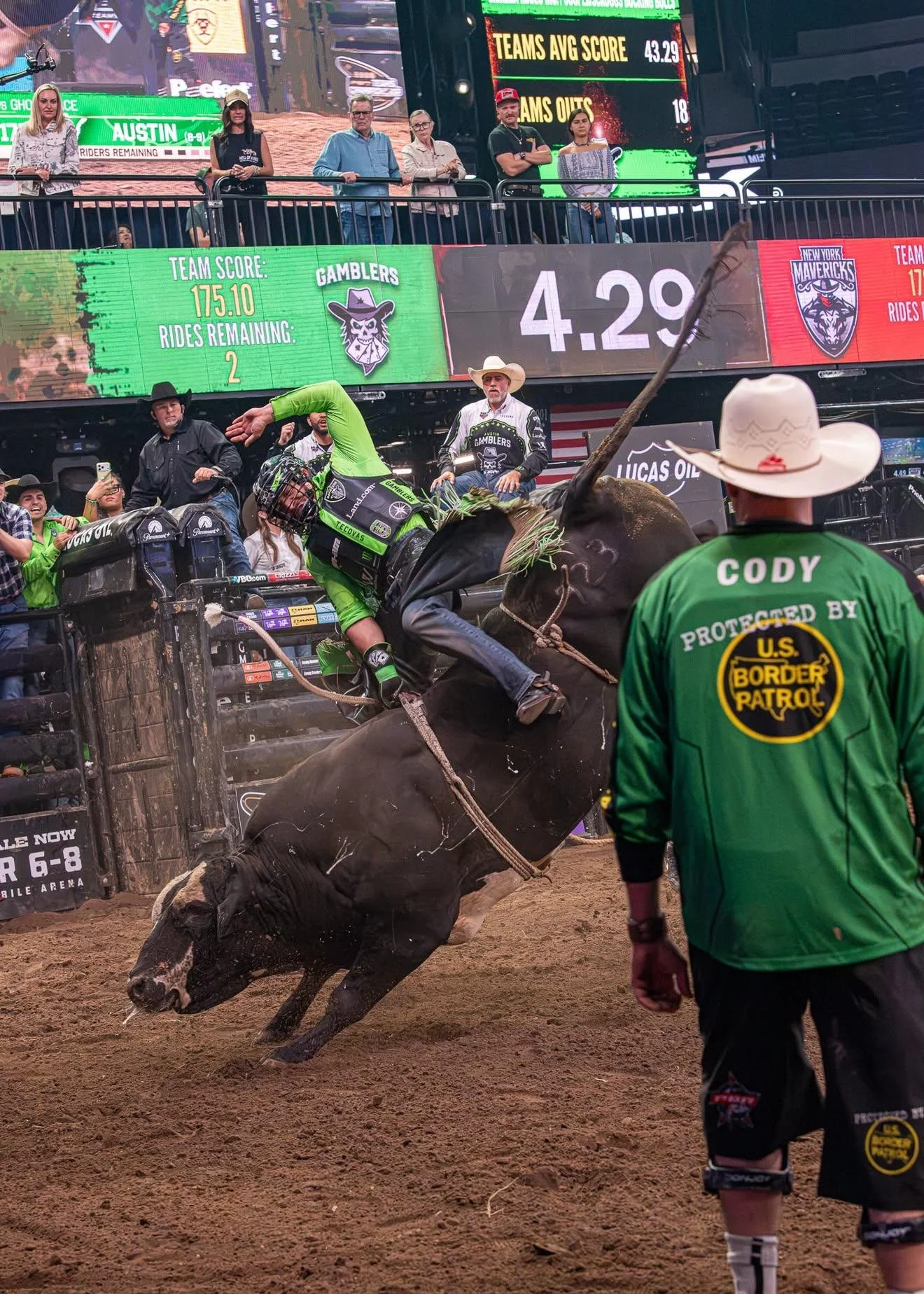
Andrew Alvidrez by Nancy Lares
I've been through multiple trainers, and I finally found one in Wichita, Texas. We dialed it down where I can still be pound-for-pound strong, but have more elusiveness, and more agility in my training programs. I’ve done boxing and MMA since I was in junior high and high school. I’ve always kept that part of my training because I love the grittiness of it, the fight!
What changes with your body and how you adjust to bull riding now that you’re less bulky? Man, you start looking around and you notice that the guys who are winning are small-framed, lean guys, pound-for-pound. That's when I decided to put the weights down and focus on being a more functional athlete.
Have you had any injuries in the sport? Any significant injuries? Oh yes, sir. I've broken my neck twice. I've had reconstructive shoulder surgery. I've torn both groins, broken both feet, both ankles. I've broken ribs, bunch of tendons torn, and muscles torn, but the neck and shoulder injuries were the ones that kept me out the longest.
Those are significant injuries. What vertebrae did you break? I fractured my C-4. At the time, I didn't even know I had fractured it. I just kept riding. I thought my neck was just sore, over time it healed, and then when I broke my C-6, I went in for an X-ray, and then that's when they told me, "Oh, yeah, you've broken your neck before." I was like, "What?" "Yeah, you see all that scar tissue?" And I was like, "Fuck, now it makes sense." I remember about a year ago, two years ago, I was hurting.
How intense is the pain from breaking a vertebra? Man, because I’ve been riding bulls for so long, I learned you need to develop a high pain tolerance if you're going to last in the sport. When I broke my neck the second time, I knew something was wrong because I had a lot of pain in my back, but I thought I might have slipped a disc, pulled something, or broken my ribs. When you break your ribs, it hurts to laugh, breathe, sneeze. So, you get accustomed to being hurt, and you just accept it, and time goes on, and you heal.
None of the pain was so significant where you think, "Oh, this is too much." You learn how to fight through it and keep moving. The hardest recovery was my shoulder. It was the longest recovery because of how much time and attention I needed. I had to go to physical therapy to get full range of motion back in my shoulder. The neck, I had to wear a neck brace for about 5 months. So, lying in bed, sleeping, and walking around, I had to have a neck brace on. That got to be a pain in the ass.
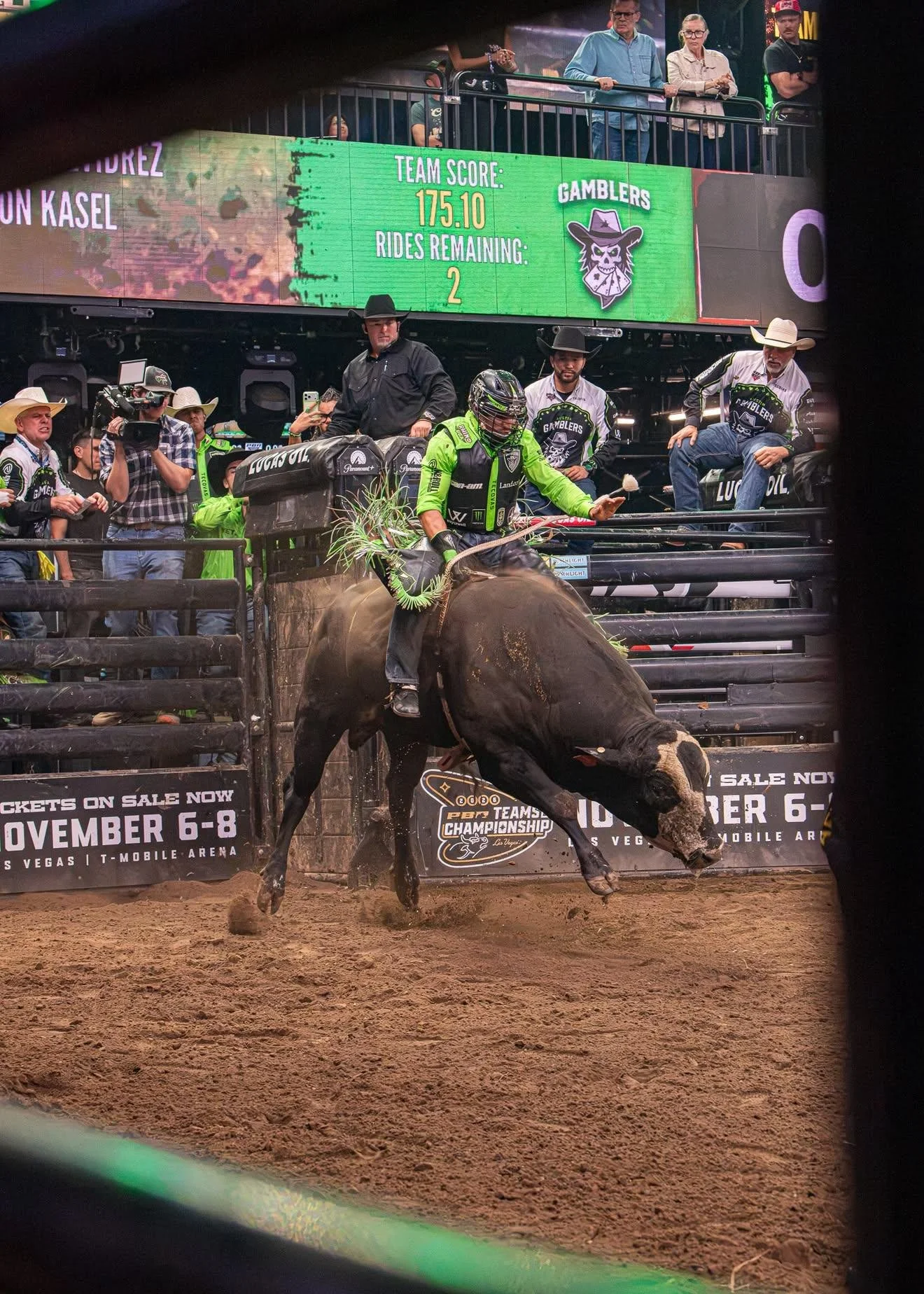
Andrew Alvidrez by Nancy Lares
You guys sacrifice a lot to put on entertaining shows. I watched the show yesterday and am always amazed at the size of the bulls, their strength, their agility, and their ability to buck. They are very unpredictable. Oh yes, sir. Man bulls, they'll test you every time.
What is most rewarding about riding the bulls? Doing my job. When I hear that whistle and I step off, that shows me all the training, all the preparation met up for that night. And for me, it's the challenge. The fact that this animal outweighs you 10 to 1, it just comes down to how big your heart is, and your preparation before that event.
So that's what I enjoy most about it, because you're not just going against the bull, you're going against yourself as well, because your mind's your biggest enemy or your greatest ally. And learning to develop those skills mentally to defeat yourself.
There is both physical and mental preparation. What's the most challenging part about riding those bulls? I'd say it's your mind. Convincing your mind that you are good enough. Fully believe that all your training was enough. We’re human at the end of the day so there's no bravery without fear. There’s no courage without doubt. And when you learn to defeat those parts of yourself that don't need to be there, you learn that you're stronger than you ever thought you were. So, for me, it's defeating myself, because honestly, bull riding is the simplest thing in the world.
It's not easy, but it's simple. You just stay in the middle and you ride that son of a bitch for 8 seconds. But doing is the hard part.
You are brave men out there riding those bulls. I appreciate it, man.
What is your proudest accomplishment in bull riding? When I earned 94 points on that bull Manhater.
How would you describe Manhater? Man, that bull bucked me off five times before I finally got him on my sixth ride. And every time he bucked me off, I knew in my heart that I could ride that bull. I made little mistakes that cost me. And the sixth time, I finally had him figured out where I knew when he would turn his back, spin, I'd be ready for it.
It sounds like as a bull rider you become really familiar with the bulls and learn of their identity, attributes, and characteristics right? Oh, yeah. All of them bulls are just like people. They have different actions and different characteristics. They have different patterns. Some bulls are similar, where they go out there 1-2, and go right or left. There are some bulls, like the one I got on yesterday, where you don't know what he's going to do.
You just got to be ready for it. With Manhater, he used to take two long two jumps and then come around. He would always buck me off by the time he came around, but the sixth time when I finally rode him, he came around a lot sooner, and I was ready for it. So, when he turned back, I was there and I was able to score 94 points.
Congratulations on that, man! Oh, thank you sir.
What would you say to people that are concerned about the welfare of the bulls that you ride? Oh, man, they're taken care of better than they take care of the bull riders. Them guys that haul these bulls all over the states, that's their living. That's their livelihood.
No bull is going to be injured or treated poorly because they're half the entertainment. Without the bulls, we don't have a show. So those bulls are taken care of to the highest standard. I've seen guys turn down hundreds of thousands of dollars because that bull is like their baby.
If you go see how these bulls are treated at home, how they're treated at the PBRs, you’ll see we have rules. If you do anything to harm the bulls or try to gain an advantage over them, they'll fine the shit out of you. And if it becomes a habitual thing, then you're going to get banned.
My brother has a ranch with horses and other animals. I see how much love and care he has for his animals, and I get a similar feeling at PBR events I’ve covered. The bulls look well taken care of, strong, healthy, and with healthy shiny coats. Yeah, sir. Oh, yeah, they're well taken care of.
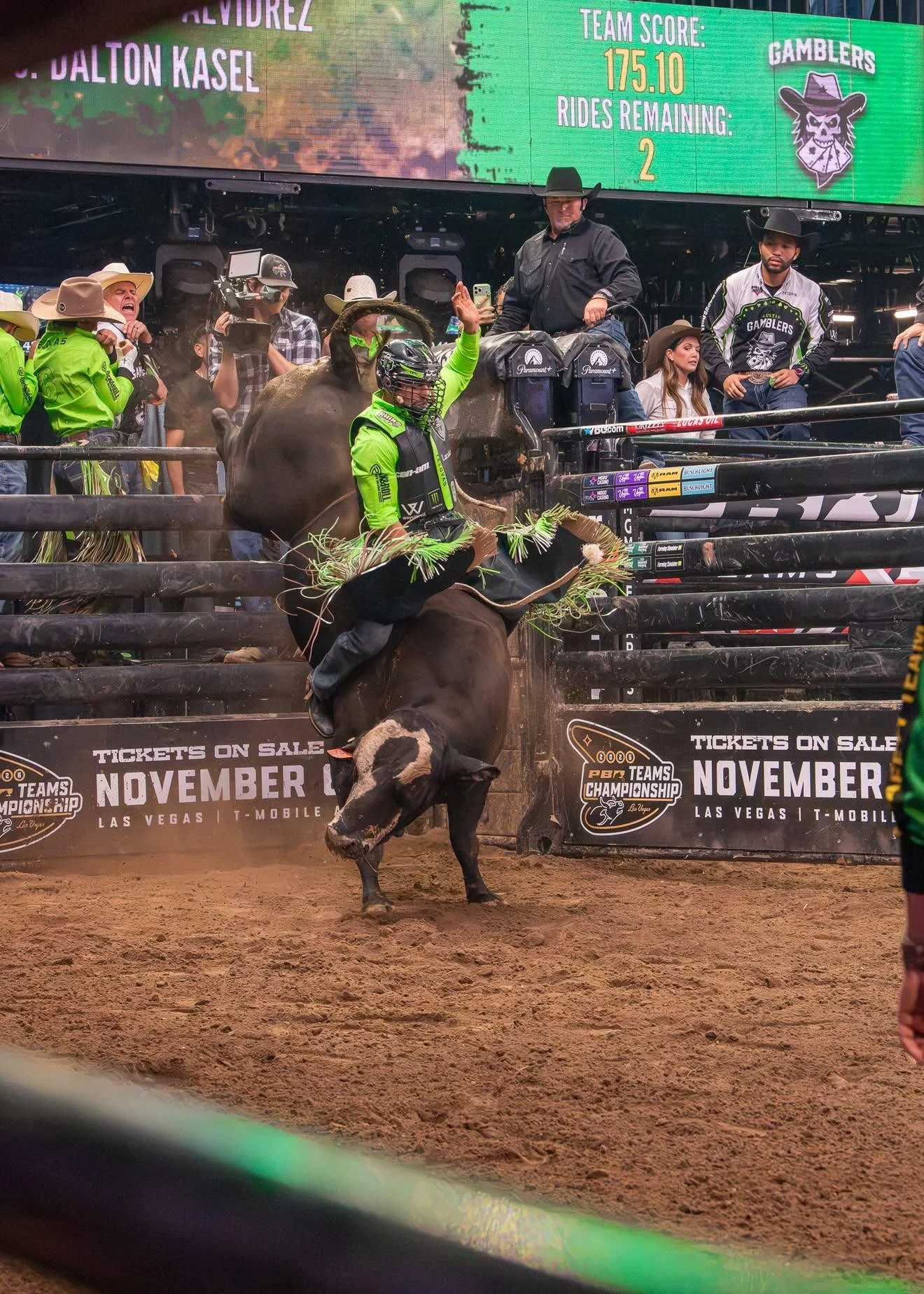
Andrew Alvidrez by Nancy Lares
How has the 2026 team season gone for you? Man, it's been a bit of a roller coaster. I'm more a fan of the individual season because at those events it is a random draw. You get scored on bull riding by yourself. It's old school bull riding, how it started, how it should be.
But with this team deal, I've had to learn to be accustomed to being part of the team, doing my part as a team player, and at the end of the day, it's still bull riding. I like the fact that it pushes you to become a better bull rider because you're no longer riding for yourself. When I do good, my teammates benefit from it. When they do good, I benefit from it. It has really brought in the comradery for bull riders to become closer.
How do you balance individual riding and the team riding? From December to May is individual season and July through November is team season.
You were traded from a different team to the Austin Gamblers. Yes, sir. I was on the Missouri Thunder for 4 years, then I got traded to the Texas Rattlers, and I just got traded to the Austin Gamblers.
How has your career changed when you're traded to a different team? How does that work? Man, honestly, it’s up to the coaches at the end of the day. I don't know the reason I got traded. I came back from Brazil and found out that I got traded, and I knew the team and I knew the bull riders on the team, so I wasn't too upset by it at all. I love the Gamblers. They're a great association and great business.
You just returned from Brazil where bull riding is very popular. I reviewed the team rosters to prepare my coverage for PBR Anaheim and learned a lot of riders are Brazilian. Is there anything you'd like to share about your visit there or about interacting with and competing against Brazilian riders? Oh man, it's so badass. Them Brazilian guys have the biggest hearts. They're the most down-to-earth, genuine people you'll ever meet. When I go down there, I'm greeted with open arms. They invite you into their homes, they cook for you, and they want you to enjoy the hospitality of the Brazilian community. What I received in Brazil words can never explain. I got to compete alongside them and saw how much heart and grit and dedication they put into the sport. It's no wonder why when they come here, they dominate.
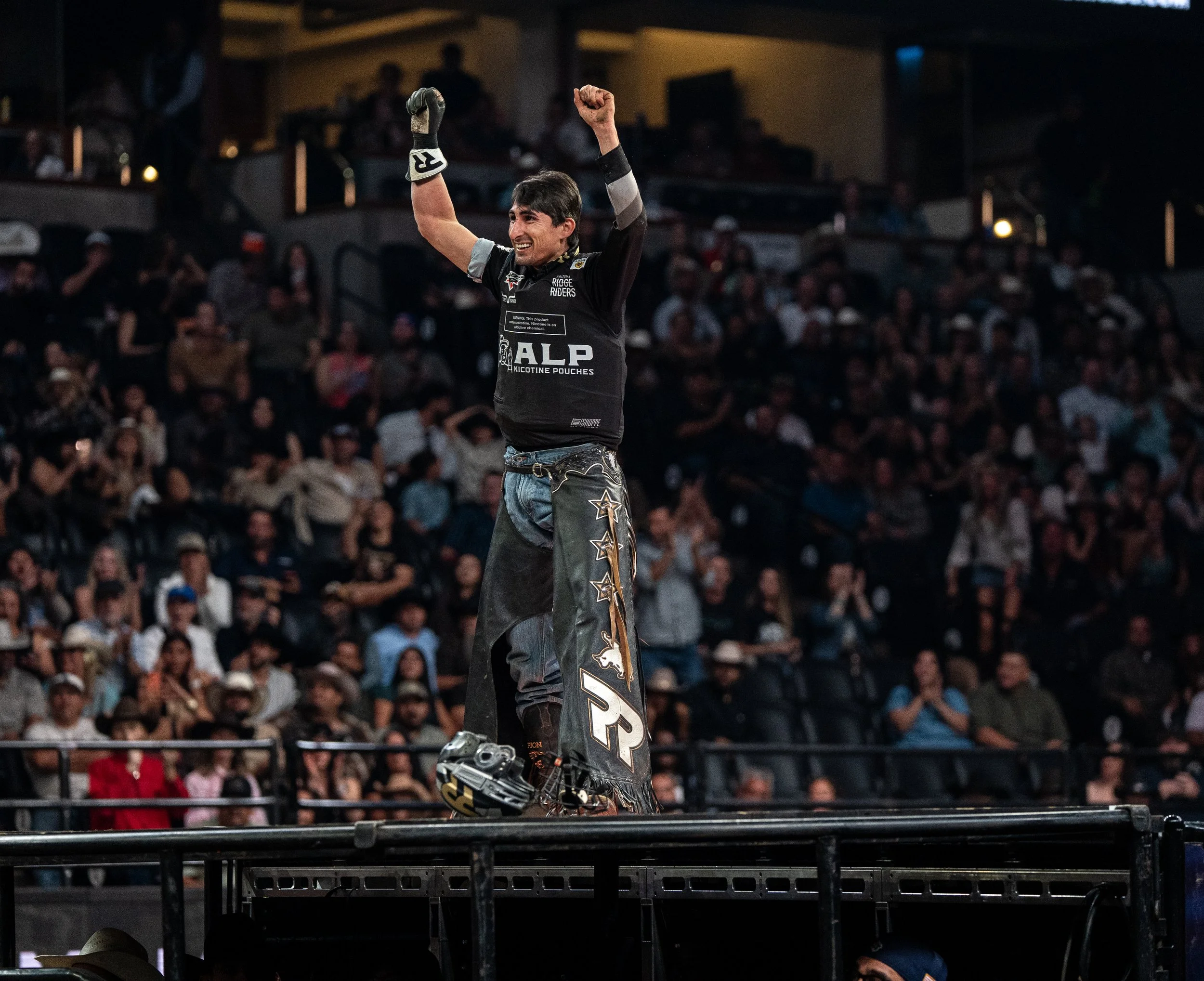
Brazilian bull rider Vitor Manoel Diaz of Arizona Ridge Ridgers after a successful 8.0 second bull ride by Roger Martinez
They have a big event there which I don't remember the name of. Do you know which one I'm referring to? Barretos, yes sir.
Yes. Have you visited or participated in it? Oh yes, sir. I've run there twice. First year I got third and this last year I ended up like 13th.
And how many riders compete?I want to say 50, but it's all selected. It' an international invite. You must be invited to Barretos. They select who gets to participate and I've been so fortunate every year they give me a call.
To someone who is not familiar with it, how would you describe the event? It is the biggest rodeo in the whole world. In a span of, I believe it's like 6 days, there's over 900,000 people. It's a huge rodeo, and then it's a huge party. It's a hell of a time, man. When I'm done riding bulls, I'm going to go down there just to see old friends and enjoy the festivities.
Have you learned Portuguese as you've been making friends with these fellas? That's just crazy, man. Since I’m the only Mexican in the PBR, I've been speaking more Portuguese and Spanish. (We’ve since learned of another Mexican American PBR rider Eric Novoa from Vacaville, California.)
I go back home and everyone looks at me like, "What are you doing speaking Portuguese?" I'm like, "Hey, man, I share a locker room with nothing but Brazilians, and if you want to learn and better yourself, you got to learn the language so you can communicate with them."
So, you're the only Mexican in the PBR? Yes, sir. I mean, I'm not from Mexico, but if you're talking about lineage, yeah, I'm Mexican blood.
That explains why I haven’t found other Mexican American riders with my research. When I cover PBR events, I review the rider names and beginning with the Latino-sounding names research where they are from. Mostly every name is that of a Brazilian rider. So, I'd like to thank you for representing us, being a good example, and giving young Chicano children an opportunity to see that working towards your dreams and making it is possible. I appreciate it, man. At the end of the day, my whole career I was the only Mexican coming up the ranks and a lot of people ask, "How were you treated?" I was treated with open arms because I always leaned in with respect. I listened more than I spoke. I was a sponge. And I worked and trained every day. And when I say every day, I mean every day. Even on the road. If I had to, I’d stretch in my hotel room, if I had to, on the side of the road, get a quick workout stretch just to wake the body up so you don't fall asleep driving. My life ever since I was 8 years old has been dedicated to bull riding.
And it's not me; I'll be honest with you. It’s not even me that did all that. I put in the work, but the opportunities that were laid in front of me all come from God. My devotion to Jesus Christ cannot compare to anything else. Not even a gold buckle.
Nothing in this world compares to the relationship I have with Jesus. And having that faith is crucial in what I do for a living, so I do believe it's fitting how God molded me to be in this position that I am, along with other bull riders. Faith and bull riding go hand in hand.
It's not just a battle of man versus beast. It's a battle of spirit versus spirit.
Them bulls are going to try to break your spirit. Whether it's when they're trying to intimidate you behind the bucking chutes, whether they're trying to intimidate you in the bucking chute, trying to buck in there and hurt you, or whenever they're out there bucking and you have to match that bull move for move.
When you feel like he's going to pull you down, are you going to take the fight back to him, or are you going to give up and try to get off? I fully believe it's a battle of spirit versus spirit with these animals.
As you describe it, and as I've covered more bull riding events, I’ve come to agree that these are creatures of God with their own spirit. They're scored on their own merits. Riders and bulls work in combination to put on a good show. The appreciation and gratitude you express for God, for your fellow riders, and for the animals reminds me of the quality of the shows that you guys put on. The shows demonstrate you really care and have made the effort to develop your God-given talent and skills to make the best of life. Oh yes, sir. 100%. And I'm still grinding, man. Even though people see me on TV and in the PBR, yeah, I'm living the dream, but you bet your ass it's still a grind. Every level up, it costs more for you. If you want to be the best in the world, there's things that you're going to have to do that your old self hasn't done. So, it's constantly having to level up, level up.
Now that you're in a successful place, what would you tell your 8-year-old self when you were watching the movie 8 Seconds? What would you say to him now? I would tell the 8-year-old Andrew, "There's a reason why God put that desire in your heart. Go for it! Chase it! And stay close to God the whole way. But I promise you, you're exactly right where you want to be if you keep God first and believe that all those dreams in your mind and heart are real." Because they are. God gives us these dreams for a reason.
He gives us these ideas for a reason. And it's up to us to accept the call and go after it. People get the call, but a lot don't follow through with it, and you were able to. Congratulations on that! Thank you, sir. Like I said, I'm a human being. I fall and I mess up just like everybody else, but I credit all my success, trials, and tribulations to my relationship with God. Because, man, it gets fucking hard, man. It does. People don't see the grind, the work.
They just see you winning in the bright lights. And I don't see anyone doing this for a living without having a strong foundation in their faith. Because without that, out of all my friends that I grew up riding with, I'm the only one that continued and prospered in it. And if I can name one difference between me and all my buddies I grew up with, I stayed close to God.
I never gave up that God had something great in store for me. And unfortunately, my circle growing up, it got smaller and smaller as the years went on. I noticed their faith diminished. Their belief in God diminished. It's unfortunate, but that's just the reality of things.
Your faith is strong. As we're finishing up, I'd like to thank you for your time and want to give you the opportunity to share or discuss anything I didn’t ask about. I would like to say, for anyone reading this, especially if you're of Mexican descent, we are a proud, strong people. My dad used to always tell us, "Mijo, we have sangre de perro. Sangre de perro.” That's what he used to always tell me: dog blood, sangre de perro. And whenever he told me that, he meant we could handle anything.
We heal fast. We fight hard. And we go on the hunt. I’d like to encourage any Mexican, Chicano, whatever it is you identify as, you're powerful.
But we all must know where that source comes from, and it's God. I promise anyone who is reading this that if you keep God first in everything that you do, you will be exactly where you want to be in life.
Cool. Cool. Thank you very much, Andrew. We appreciate your time.
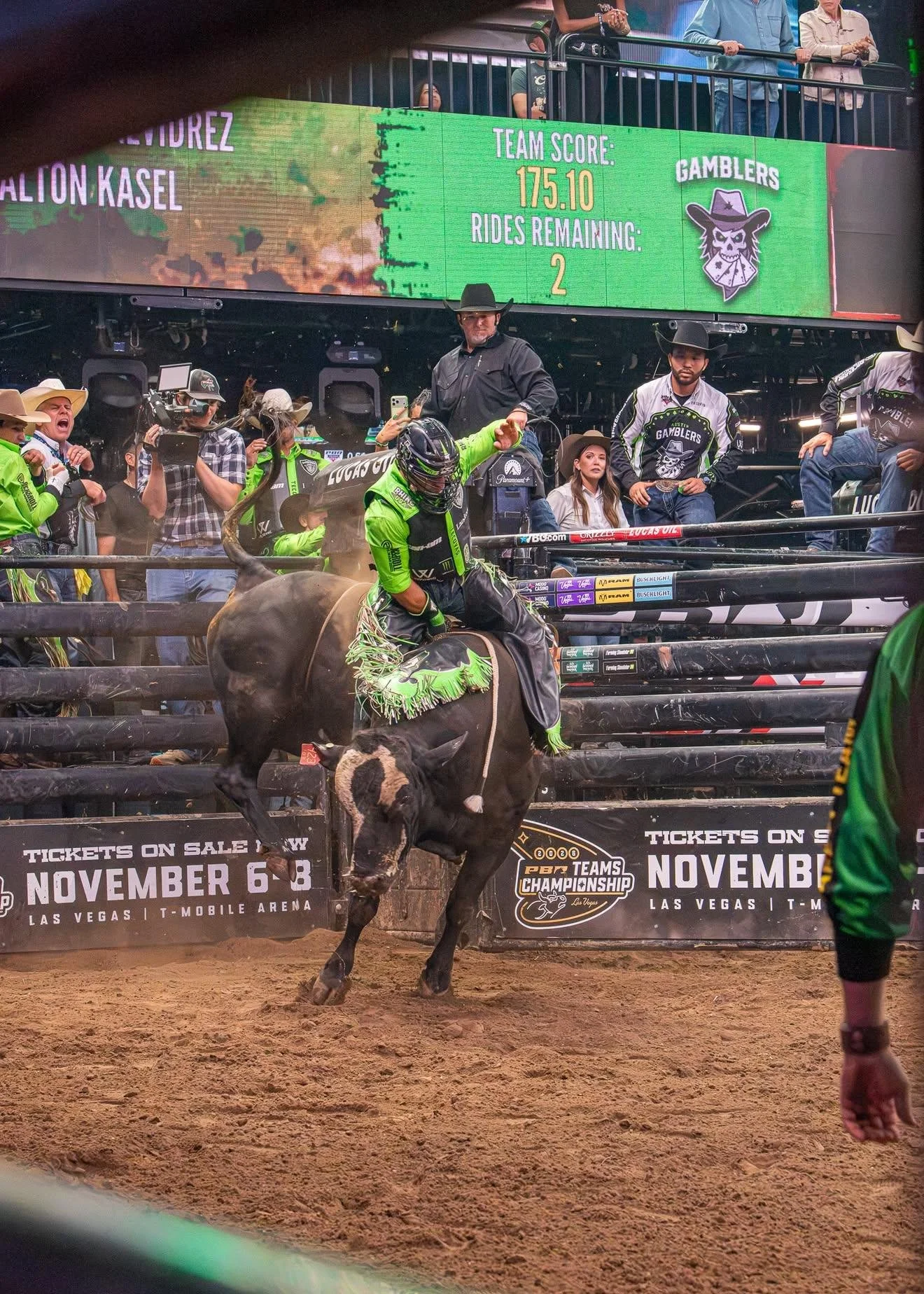
Andrew Alvidrez by Nancy Lares